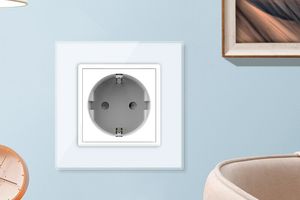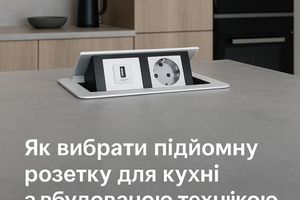
For many electrical appliances, maintaining correct polarity is essential. This applies not only to high-power household equipment but also to standard fittings, including sockets. Incorrect connection may result in electric shock.
Knowing how to identify the phase in a socket is important for proper operation and electrical safety. In the Livolo online store, you can purchase modern fittings that are also suitable for smart home systems.

What Are Phase, Neutral, and Ground
These are the three main conductors in a 220 V electrical network. They can be identified by their markings. Let’s review the features of each in the table below.
|
Criterion |
Phase |
Neutral |
Ground |
|
Definition |
An active conductor relative to neutral and ground |
A return conductor with zero potential relative to ground |
A protective conductor connecting the socket housing to the earth |
|
Purpose |
Carries alternating voltage and supplies power to appliances |
Returns current, completing the circuit |
Ensures safety by directing fault current to ground instead of a person |
|
Marking letter |
L |
N |
PE |
|
Color coding |
Brown, black, gray, white, red |
Blue or light blue |
Yellow-green |
“In older buildings, color coding may be absent or not meet standards. Therefore, special tools should be used to identify phase and neutral.”
To better understand how these components work:
- the phase delivers electrical energy from the socket to the connected appliance;
- the neutral enables current flow back to the source;
- the ground creates a low-resistance path between the system and the earth to safely dissipate unwanted currents and prevent electric shock.
Phase, neutral, and ground are essential parts of an electrical system. Grounding is now considered a mandatory safety standard. On our website, you can choose electrical sockets with grounding in a wide range.
How to Identify Phase with an Indicator Screwdriver
You should not rely solely on color coding, as it may differ from standards or be absent. One of the simplest ways to find the phase in a socket is using an indicator screwdriver. The process is as follows:
- Make sure the tool insulation is intact and has no mechanical damage.
- Hold the screwdriver by the insulated handle, placing your finger on the metal plate or button at the end.
- Insert the tip into the socket holes one by one.
- If the indicator light inside the handle turns on when touching a contact, you have found the phase.
When touching neutral or ground, the indicator will not light up.
If the indicator lights up in both holes, this means there are two phases, which is abnormal. It may indicate a broken neutral connection somewhere in the circuit.
Always follow safety rules: do not touch the metal tip and avoid using the tool in humid conditions.
How to Check Phase with a Multimeter
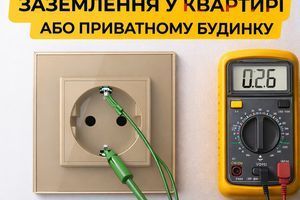
If your socket has grounding, you can also easily identify the conductor using a multimeter. Set it to measure AC voltage (VAC) above 220 V (typically 650–750 V).
- Connect the black probe to the common input and the red probe to the voltage input.
- Hold the metal tip of the black probe (this is safe — your body acts as grounding).
- Touch the red probe to each contact in turn.
If the display shows 220–230 V, you have found the phase. If you are uncomfortable touching the probe, you can wrap the wire around your finger instead.
Both methods also help identify neutral. With a screwdriver, the light will not turn on. With a multimeter, readings will be very low (0–10–20 V).
How to Find Ground in a Socket
You can identify grounding visually — sockets have additional metal contacts at the top and bottom. In European-standard fittings, grounding is always present.
The most accurate method is using a multimeter:
- set it to AC voltage measurement;
- place one probe on phase and the other on the grounding contact — it should show 220–230 V;
- measure between neutral and ground — if voltage is zero or low, grounding is present.
You can also use an indicator screwdriver: when touching grounding contacts, the light should not turn on.
Safety Rules When Checking Electricity
Before testing, always disconnect the socket via the distribution board. Use only undamaged tools.
For safety, do not touch tools or sockets with wet hands, use rubber gloves, and ensure wires are intact. Avoid working near flammable materials.
Knowing where phase and neutral are is also important when installing switches. Switches must break the phase conductor, not the neutral. Otherwise, the light will work, but voltage will remain on the lamp holder, which is dangerous.
How to identify phase in a socket?
The easiest way is with an indicator screwdriver — the light will turn on when touching the phase.
Which wire is neutral?
Usually blue or light blue, marked with the letter N.
How to check grounding?
With an indicator screwdriver (no light) or a multimeter (220–230 V between phase and ground).
How to check phase?
Using an indicator screwdriver or a multimeter (shows 220–230 V).
Can phase be checked with a screwdriver?
Yes, using an indicator screwdriver, provided it is in good condition.