Technology is rapidly entering our lives, and many apartment and house owners are already implementing smart systems.
The "Smart Home" system is already familiar to many modern homeowners, but for the majority of people, it still remains a somewhat unclear technological novelty. For instance, terms like ZigBee vs. Z-Wave may cause confusion.
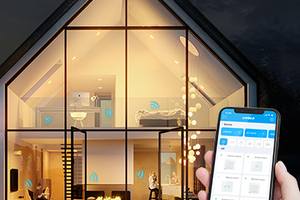
At the same time, Smart Home is more than just a trendy term — it’s an entire system that works seamlessly and manages various processes in your home. With a single tap, you can turn off the lights, adjust the thermostat, lock the door, or receive a notification from a motion sensor.
Behind all this convenience lies an invisible yet critical part — the communication protocol. Today, we’ll compare the two most popular protocols, ZigBee and Z-Wave, and also take a look at Wi-Fi connectivity.
Each protocol has its own advantages, disadvantages, frequency ranges, compatibility levels, integration, reliability, and whether a dedicated controller, coordinator, or router is required. Choosing the right one means building a stable, long-lasting smart home ecosystem without unnecessary costs or complex configurations.

What a Wireless Smart Home Network Consists Of
A modern smart home is based on mesh networks that connect sensors, thermostats, lights, locks, controllers, and other devices via wireless protocols. The core of the infrastructure is a coordinator (or controller) that manages the entire network.
Depending on the type of connection, a specific frequency range is used (e.g., 2.4 GHz or 868/915 MHz), along with corresponding levels of energy consumption, signal protection, and internet integration.
Key characteristics when choosing a protocol include:
- Signal transmission reliability;
- Latency between command and action;
- Ability to relay signals;
- Equipment cost;
- Compatibility with third-party systems.
Below, we’ll examine the three main standards: ZigBee, Z-Wave, and Wi-Fi — the most common wireless IoT protocols used in Smart Homes.
ZigBee and Its Features
ZigBee is a special wireless protocol designed specifically for smart home devices. It operates on the 2.4 GHz frequency and supports mesh networking technology, allowing devices to relay signals to one another.
This standard is known for its low power consumption, making it ideal for battery-powered devices. A device can run on a single battery for years without needing replacement. The mesh structure enhances network range and reliability. ZigBee also provides a high level of security.
The protocol is license-free, has an open ecosystem, and easily integrates with platforms like Amazon Alexa and Google Assistant. However, a dedicated ZigBee coordinator (hub) is required. It works best with smart sensors, bulbs, sockets, and similar devices.
Z-Wave: What It Is
Z-Wave is not a free protocol. It operates in narrow frequency bands: 868 MHz in Europe and 915 MHz in the US. Thanks to this, it avoids interference with other technologies.
Its main strengths are reliability and stability. Like ZigBee, it uses a mesh structure, but with a limit of four signal hops. Its maximum signal range is up to 100 meters in open space. Z-Wave also offers low power consumption and long battery life.
Main drawbacks include:
- Limited number of devices (up to 232 per network);
- Higher cost of controllers;
- Limited openness — Z-Wave Alliance certification is required.
Still, it offers strict compatibility among devices, minimizing signal delays and system failures.
Wi-Fi: A Well-Known Protocol
One of the most widespread communication standards in Smart Home systems is Wi-Fi. Anyone with a home internet connection is familiar with it. It operates on 2.4 GHz and 5 GHz bands, providing high transmission speeds — ideal for cameras, audio systems, and power-hungry devices.
Its main advantages are:
- No need for a dedicated controller or coordinator;
- Easy internet integration;
- Support for cloud services (local/cloud).
Disadvantages include:
- High energy consumption — unsuitable for battery-powered devices;
- Poor indoor range — walls reduce signal strength;
- No native mesh architecture for IoT — only through an external router.
Wi-Fi is perfect for stationary, mains-powered devices but not for autonomous sensors.
Comparison Table: Which One Is More Practical?
To make it easier to compare ZigBee, Z-Wave, and Wi-Fi, we’ve put together a handy comparison table for you.
|
Characteristic |
ZigBee |
Z-Wave |
Wi-Fi |
|
Frequency |
2.4 GHz |
868 MHz |
2.4 GHz |
|
Power consumption |
Low |
Low |
High |
|
Security |
AES 128 encryption |
AES 128 encryption |
WPA2, WPA3 |
|
Mesh architecture |
Yes |
Yes |
No |
|
Signal range |
Approx. 10–30 meters |
30–100 meters |
Up to 30 meters, line of sight |
|
Compatibility |
Open |
Proprietary license |
Open |
|
Signal delay |
Low |
Low |
Medium |
|
Devices per network |
Up to 65,000 |
Up to 232 |
Router-dependent |
This should help you better navigate which smart home protocol to choose and determine compatibility with switches, various sensors, and more.
Practical Example with Livolo
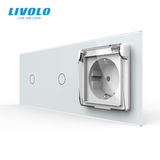
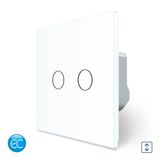
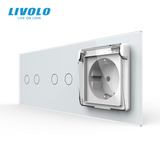
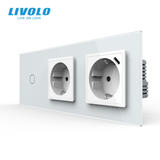
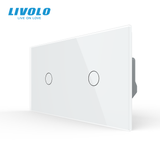
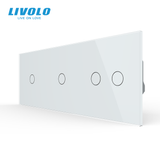
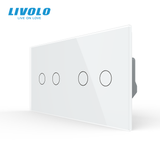
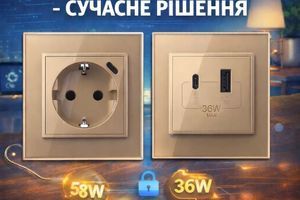
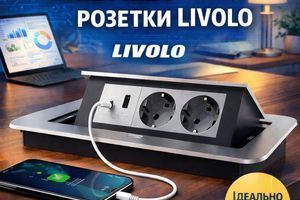
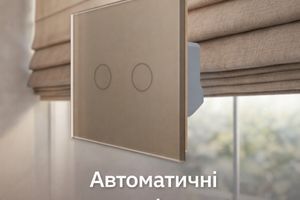
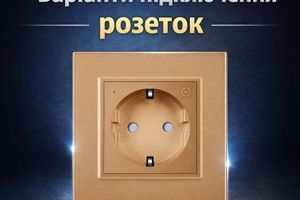
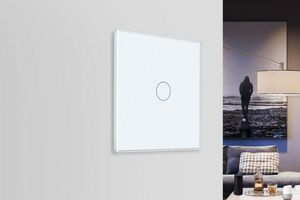
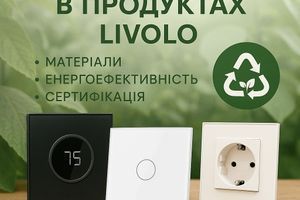
Livolo is a popular manufacturer of smart switches and lighting control devices for Smart Home systems. Most of the brand's new devices support both ZigBee and Wi-Fi, offering flexibility so you can choose the protocol that suits you best.
Individual control components are easily integrated into a unified system using the Livolo ZigBee gateway. To do this:
- Purchase a controller, smart switches, motion sensors, and other ZigBee-compatible devices, and connect them to the internet.
- Download and install the mobile app for controlling the equipment via smartphone.
- Configure device operation by creating custom scenarios.
For even more convenient control, you can buy a tablet with pre-installed Livolo software. Setting the desired system parameters is much easier with a stylish large-screen assistant.
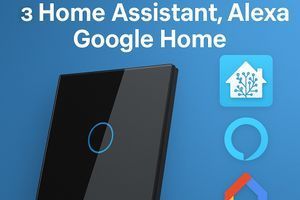
Internet connectivity allows you to control Smart Home elements using voice assistants (Alexa or Google) as well as the mobile app.
Recommendations for Choosing
So, which protocol and electrical accessories should you choose to build a truly convenient, modern, and comfortable home system? If low energy consumption, battery operation, and a reliable mesh network are important, choose the ZigBee standard. For stable performance in low-interference environments (like houses with thick walls), Z-Wave is the best choice.
If you prefer easy setup without additional controllers and your devices are mostly mains-powered, then Wi-Fi is the way to go. Always consider compatibility with voice assistants, integration options, and device types.
For instance, when shopping for Livolo smart home components, the product description indicates which voice assistant and communication standard each device supports — making it convenient for online buyers who shop without help from store consultants.
The Future: Thread, Matter, and Protocol Integration
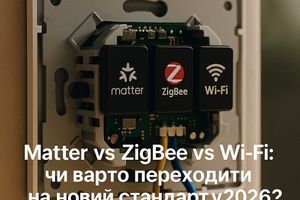
Let’s look into the future. Today, the Matter protocol is emerging — a universal standard developed by Apple, Google, Amazon, and others. It operates over Thread — a modern mesh protocol based on IEEE 802.15.4, somewhat similar to ZigBee, but with better integration, openness, and energy efficiency.
Thread is an IP-based protocol that enables devices to operate locally without constant internet access and with minimal delay. Its nodes form a network on their own, without a centralized controller.
Matter acts as a bridge between ZigBee, Z-Wave, Wi-Fi, Bluetooth, and Thread, ensuring true integration and compatibility. For example, your Thread thermostat can communicate with a ZigBee switch or a Wi-Fi outlet — all without extra hubs or licenses.
This way, Smart Homes are becoming closer to the ideal: open, reliable, energy-efficient, low-cost, and easy to control. If you're planning to implement these technologies in your home, you can get everything you need from Livolo.
Choose the protocol that suits your needs — currently, Livolo devices primarily support ZigBee — or wait for Matter. Either way, it’s worth considering compatibility, frequencies, integration, and power consumption now. Technology doesn’t stand still, and new devices and protocols are just around the corner.